Despite the decline in the use of waterways, the link between humans and rivers remains alive in the Veneto region, where many inland cities have historically benefited from intense river traffic.
Archaeological evidence shows that Veneto's waterways were exploited as early as the Paleovenetian period, and major urban centers developed along rivers, canals, and coastlines. In the Middle Ages, canals and rivers acquired great military and civilian importance, for transport of goods, soldiers, and water supply.
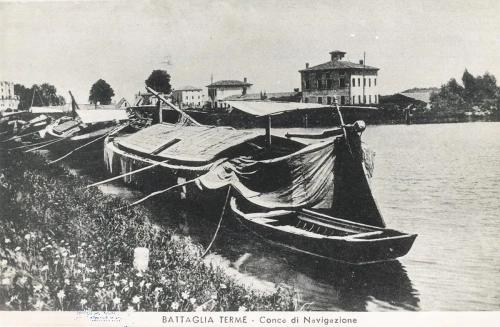
Numerous conflicts arose over control of waterways, such as the one between Padua and Vicenza in the 12th century, which led to the construction of the Battaglia Canal and the hydraulic engineering of the Arco di Mezzo, which regulated the transfer of water between Bacchiglione and Vigenzone, powering mills and factories and fostering a prosperous economy.
With the fall of Constantinople, Venice strengthened the Veneto's hydraulic network to safeguard the lagoon, and even under Austrian rule waterway maintenance was encouraged.
Only from the nineteenth century did river navigation lose importance, overtaken by railways and the emergence of road transport.
Today the historic canals are used for tourism, sports and traditional re-enactments, such as Venetian rowing, keeping the memory and use of these ancient waterways alive.